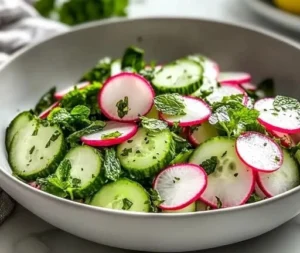
Spring Salad with Dill and Lemon Dressing Made Easy
Spring Salad with Dill and Lemon Dressing is a crisp spring salad combining mixed greens, cucumber, cherry tomatoes, and bright dressing. The lemon and dill dressing brightens the vegetables and keeps the salad light and refreshing for warm-weather meals. I often pair it with grilled fish or with California salad with jalapeno ranch dressing for a full spring meal.
| Prep Time | 10 minutes |
|---|---|
| Cook Time | 0 minutes |
| Total Time | 10 minutes |
| Servings | 4 |
| Difficulty | Easy |
| Cuisine | Modern American / Spring |
Why This Recipe Works
This recipe works because the lemon and dill dressing complements rather than overpowers the fresh vegetables. The acidity of lemon brightens the greens while olive oil carries the herbaceous dill to every leaf.
I learned through repeated home testing that quick assembly preserves texture and flavor for this salad. Tossing just before serving keeps the cucumbers crisp and the cherry tomatoes juicy, creating a balanced mouthfeel and clean finish.
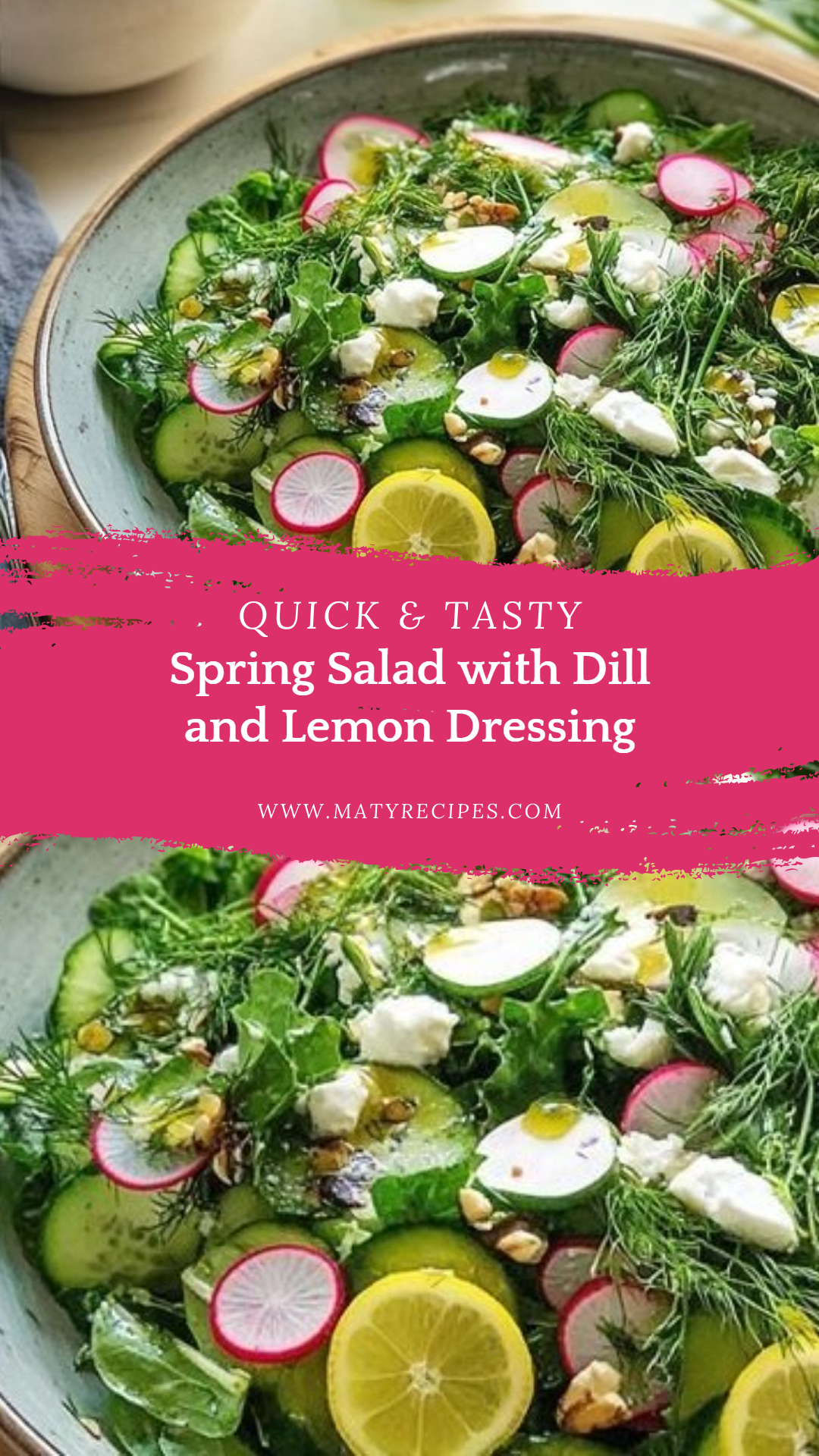
Ingredients Needed
These are the ingredients required to prepare Spring Salad with Dill and Lemon Dressing exactly as intended.
| Ingredient | Quantity | Notes with alternatives |
|---|---|---|
| Mixed greens (spinach, arugula, romaine) | 6 cups | Use spring mix for convenience, or baby greens for a tender texture. See the best pasta salad with Italian dressing for more greens pairings ideas. |
| Cucumber, sliced | 1 medium | Seeded English cucumber stays crisp; Persian cucumber is sweeter and thinner. |
| Cherry tomatoes, halved | 1 cup | Use a mix of red and yellow for color contrast; grape tomatoes work too. |
| Red onion, thinly sliced | 1/4 small | Soak slices in cold water for ten minutes to mellow sharpness if desired. |
| Fresh dill, chopped | 2 tablespoons | Use fresh dill fronds for best aroma; substitute 1 teaspoon dried dill if necessary. |
| Lemon juice | 2 tablespoons | Freshly squeezed lemon juice provides the best brightness; bottled will work in a pinch. |
| Olive oil | 3 tablespoons | Extra virgin olive oil adds peppery notes; use light olive oil for a milder dressing. |
| Salt | 1/2 teaspoon, plus to taste | Adjust to preference; kosher salt measures differently than table salt. |
| Pepper | 1/4 teaspoon, plus to taste | Freshly cracked black pepper highlights the lemon and dill. |
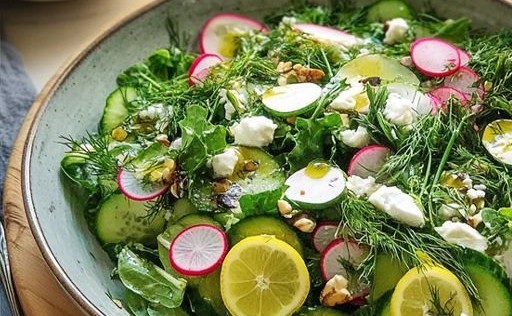
Step-by-Step Instructions
This section answers how to assemble the Spring Salad with Dill and Lemon Dressing step by step for consistent results.
Prep the produce
- Wash and dry the mixed greens thoroughly so dressing will adhere without wilting leaves.
- Slice the cucumber into thin rounds or half-moons for even bites and texture uniformity.
- Halve the cherry tomatoes to release a burst of juice and make them salad-ready.
- Thinly slice the red onion so it mixes evenly and does not dominate each forkful.
Make the dressing
- Measure lemon juice and olive oil into a small bowl to prepare the dressing base.
- Chop the fresh dill finely so it disperses through the dressing and flavors every bite.
- Whisk together lemon juice, olive oil, chopped dill, salt, and pepper until emulsified.
- Taste the dressing and adjust salt or lemon to achieve a bright, balanced acidity.
Assemble and serve
- Combine mixed greens, cucumber, cherry tomatoes, and red onion in a large mixing bowl.
- Drizzle the dressing over the salad evenly, ensuring each area receives some coating.
- Toss the salad gently using salad tongs or clean hands to coat ingredients without bruising.
- Serve immediately on chilled plates as a refreshing side dish or light main meal.
Chef Tips for Perfect Results
These tips answer how to elevate the salad with small, practical adjustments for maximum freshness and flavor.
- Use a salad spinner to remove excess water from greens; dry leaves hold dressing better and stay crisp longer.
- Always taste the dressing before adding; increase lemon slowly to avoid over-acidity and maintain balance.
- Chop dill just before whisking into the dressing to preserve volatile aromatics and fresh herb character.
- Slice vegetables uniformly so each bite includes a balanced mix of greens, cucumber, and tomato.
- Serve on chilled plates to keep the salad cool during warm-weather meals and maintain texture.
Common Mistakes to Avoid
This section answers which mistakes commonly degrade the salad and how to prevent them with simple fixes.
- Overdressing the salad: WHY it happens and how to fix it. Excess dressing wilts greens quickly; toss with half the dressing, then add more sparingly if needed.
- Using wilted greens: WHY it hurts texture and how to fix it. Wilted greens lack crunch; refresh them in an ice water bath for ten minutes before drying well.
- Chopping dill too coarsely: WHY it reduces flavor distribution and how to fix it. Large herb pieces provide uneven flavor; mince dill finely so it flavors the dressing evenly.
- Not tasting the dressing: WHY this leads to imbalance and how to fix it. Lemon levels vary; always taste and adjust acid, oil, salt, or pepper before dressing the salad.
- Preparing too far ahead: WHY freshness suffers and how to fix it. Vegetables release moisture over time; make the dressing ahead but toss the salad immediately before serving.
Variations and Substitutions
This table answers which swaps work well and explains how they change the salad’s flavor profile.
| Ingredient | Substitution | Impact on Flavor |
|---|---|---|
| Mixed greens | Arugula only or butter lettuce | Arugula adds peppery bite; butter lettuce softens texture and gives a milder taste. |
| Cucumber | Zucchini ribbons or shaved fennel | Zucchini is milder and less watery; fennel adds sweet anise notes and crunchy contrast. |
| Fresh dill | Dried dill or fresh tarragon | Dried dill is less aromatic; tarragon imparts licorice hints and changes the herb profile significantly. |
| Lemon juice | White wine vinegar or apple cider vinegar | Vinegars deliver tang with less citrus aroma, shifting the dressing toward tangy instead of bright citrus. |
| Olive oil | Avocado oil or light sesame oil | Avocado oil gives a neutral, buttery mouthfeel; sesame oil adds a nutty undertone and Asian flair. |
| Cherry tomatoes | Roasted red peppers or sun-dried tomatoes | Roasted peppers add smoky sweetness; sun-dried tomatoes increase umami and chewiness. |
For a colorful root-veg focused pairing idea and additional baking inspiration, try pairing with vibrant beet salad with feta and cucumbers.
Serving Suggestions and Pairings
This salad serves as a versatile companion for a wide variety of mains and casual gatherings.
Pair the salad with grilled lemon-herb salmon, roasted chicken, or seared scallops for light dinner occasions. For a vegetarian option serve alongside warm quinoa pilaf, grilled halloumi, or a hearty lentil stew for balanced textures and protein.
Present this salad at spring brunches, casual al fresco lunches, or holiday buffets where light, bright dishes are appreciated. For dessert offer citrus bars or simple lemon sorbet to maintain the bright citrus theme, and consider pairing with carrot zucchini bars with lemon frosting for a complementary sweet finish.
Storage and Reheating
This table answers how to store leftover salad safely and whether reheating is appropriate.
| Method | Duration | Instructions |
|---|---|---|
| Greens and vegetables, undressed | Up to 3 days | Store in an airtight container with a paper towel to absorb moisture; keep refrigerated. |
| Dressing, refrigerated separately | Up to 5 days | Keep in a small jar with lid; shake well before using because oil may separate. |
| Assembled salad | Best served immediately; up to 6 hours | Keep chilled and covered; expect some wilting and moisture release after a few hours. |
| Reheating | Not recommended | Do not reheat leafy salads; serve cold or at room temperature for safety and quality. |
Nutritional Information
This table provides approximate values for a single serving of the salad prepared as directed.
| Nutrient | Amount per Serving (Approximate values) |
|---|---|
| Calories | 140 kcal |
| Total Fat | 11 g |
| Saturated Fat | 1.5 g |
| Carbohydrates | 8 g |
| Fiber | 2.5 g |
| Sugars | 3 g |
| Protein | 2 g |
| Sodium | 220 mg (varies with salt added) |
Frequently Asked Questions
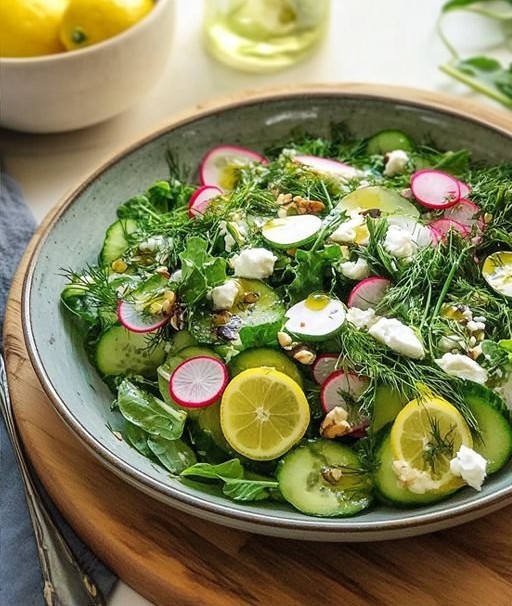
This FAQ section answers common practical questions about substitutions, make-ahead strategies, and troubleshooting.
Can I substitute dried dill for fresh dill in the dressing?
Yes, you can substitute dried dill for fresh dill using a smaller amount to maintain flavor balance. Use one teaspoon of dried dill for every tablespoon of fresh dill called for, and allow the dressing to rest for ten minutes to hydrate the dried herb. This substitution slightly reduces brightness but retains the herb profile, so adjust lemon or salt if needed.
How long will the salad stay crisp after dressing?
The salad will stay crisp for roughly six hours when kept chilled and dressed lightly. Over time, the cucumbers and tomatoes release moisture, which causes greens to soften and reduces crunch. To maximize quality, store components separately and toss just before serving for peak texture.
What should I do if the dressing tastes flat or bitter?
Taste the dressing and adjust by adding small amounts of acid, oil, or salt to correct flatness or bitterness. If bitter, add a pinch of sugar or a touch more olive oil to round flavors and reduce perceived sharpness. If excessively sour, increase oil or add a tiny pinch of baking soda to neutralize acidity, then re-taste.
Can I make the dressing and salad ahead for a picnic?
Yes, make the dressing up to five days in advance and store it refrigerated in a sealed jar. Keep the salad greens and vegetables chilled and packed separately to prevent wilting during transport. Combine and toss the components just before eating to ensure freshness and crisp texture.
What are good protein additions if I want to make this salad a meal?
Add grilled shrimp, sliced roasted chicken breast, or pan-seared tofu to transform the salad into a satisfying main dish. These proteins complement the lemon-dill dressing and enhance the meal’s nutritional balance. For vegetarian protein, consider cold quinoa, roasted chickpeas, or a scoop of herbed cottage cheese to keep flavors bright.
Conclusion
Spring Salad with Dill and Lemon Dressing offers a bright, simple, and reliable way to showcase seasonal produce. The lemon-dill dressing creates a signature fresh finish that complements many mains and events, encouraging repeat preparation throughout warm months. Embrace the herbaceous punch and citrus lift as the salad’s signature flavor.
Related recipes and inspiration: best pasta salad with Italian dressing provides a hearty side option, and the USDA offers leaf vegetable safety guidance at USDA.
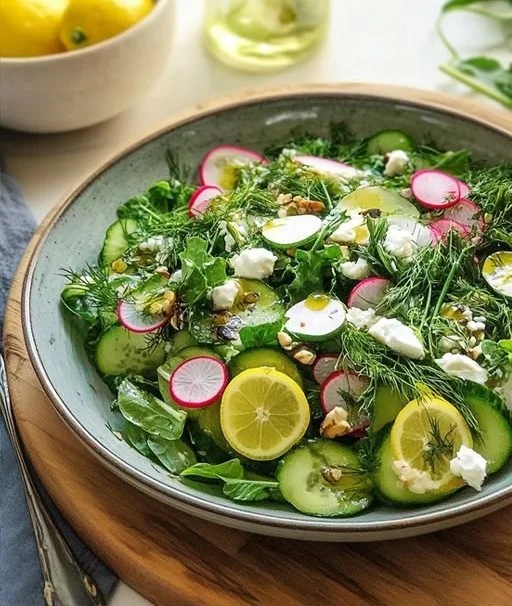
Spring Salad with Dill and Lemon Dressing
Ingredients
Method
- Wash and dry the mixed greens thoroughly so dressing will adhere without wilting leaves.
- Slice the cucumber into thin rounds or half-moons for even bites and texture uniformity.
- Halve the cherry tomatoes to release a burst of juice and make them salad-ready.
- Thinly slice the red onion so it mixes evenly and does not dominate each forkful.
- Measure lemon juice and olive oil into a small bowl to prepare the dressing base.
- Chop the fresh dill finely so it disperses through the dressing and flavors every bite.
- Whisk together lemon juice, olive oil, chopped dill, salt, and pepper until emulsified.
- Taste the dressing and adjust salt or lemon to achieve a bright, balanced acidity.
- Combine mixed greens, cucumber, cherry tomatoes, and red onion in a large mixing bowl.
- Drizzle the dressing over the salad evenly, ensuring each area receives some coating.
- Toss the salad gently using salad tongs or clean hands to coat ingredients without bruising.
- Serve immediately on chilled plates as a refreshing side dish or light main meal.