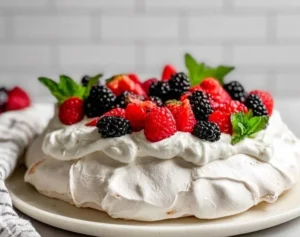
Pavlova with Berries: Light Summer Meringue Dessert
Pavlova with Berries is a crisp meringue shell topped with whipped cream and mixed fresh berries for bright contrast. This pavlova balances a crunchy exterior and a marshmallow-soft center, giving every bite airy sweetness and juicy fruit. For a simple variation that keeps summer brightness, try a stone-fruit twist described in the peach cobbler pairing below.
| Prep Time | Cook Time | Total Time | Servings | Difficulty | Cuisine |
|---|---|---|---|---|---|
| 15 minutes | 1 hour (plus cooling) | About 2 hours | 6–8 | Moderate | Australasian / Dessert |
Why This Recipe Works
This recipe works because the technique prioritizes stable, glossy meringue and gentle drying to create a crisp outside and soft interior. I rely on gradual sugar incorporation and a slow oven to dry the meringue without browning, based on repeated kitchen tests that produced consistent texture and flavor.
This pavlova recipe works by using vinegar and cornstarch to stabilize the egg whites and lock in a marshmallow center, and fresh berries add acidity that brightens the whole dessert. Over several attempts I found that whipping to stiff peaks and using an oven cooldown step yielded predictable results every time.
{image_template}
Image ALT suggestion: Close-up of a pavlova with whipped cream and mixed berries showing crisp meringue edges.
Ingredients
| Ingredient | Quantity | Notes |
|---|---|---|
| Large egg whites | 4 | Room temperature eggs whip more easily; pasteurized eggs acceptable |
| Granulated sugar | 1 cup | Use superfine sugar if available for quicker dissolution |
| Vanilla extract | 1 teaspoon | Pure vanilla preferred; or use vanilla bean paste |
| White vinegar | 1 teaspoon | Stabilizes meringue; lemon juice can substitute |
| Cornstarch | 1 tablespoon | Helps create a marshmallow center; potato starch works too |
| Heavy whipping cream | 1 cup | Chill bowl and beaters for best whipping results |
| Mixed fresh berries | 2 cups | Strawberries, blueberries, raspberries; swap in stone fruit as desired |
| Powdered sugar (optional) | To dust | Light dusting enhances presentation |
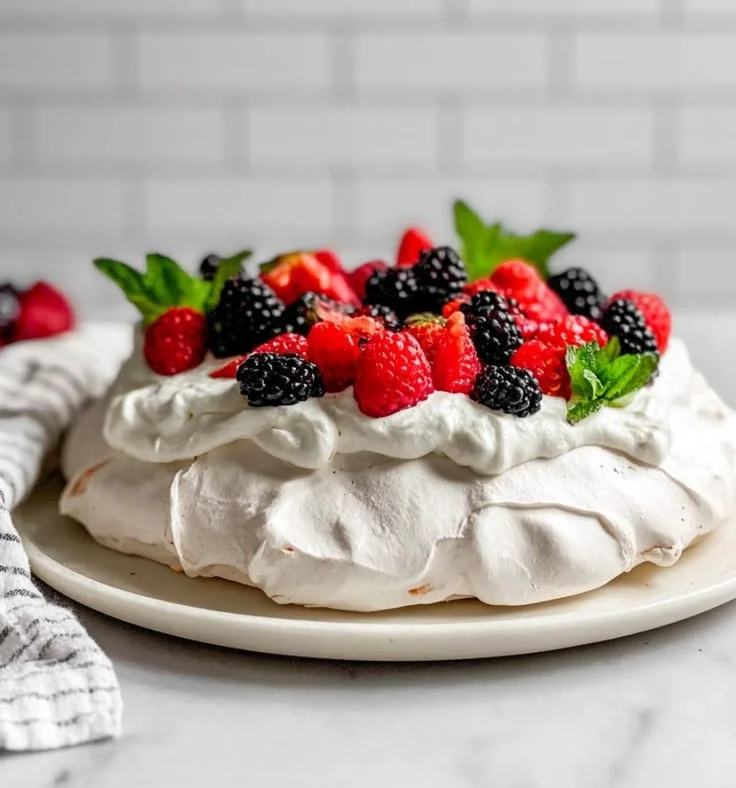
Image ALT suggestion: Ingredients laid out on a counter: eggs, sugar, cornstarch, cream, and mixed berries.
Step-by-Step Instructions
Follow the sequence below so the meringue dries properly and assembly is quick before serving.
Prepare the oven and sheet
- Preheat the oven to 250°F (120°C) and line a baking sheet with parchment paper.
Make the meringue
- Whisk the egg whites on high speed until soft peaks form.
- Add the granulated sugar gradually, one spoonful at a time, until the mixture becomes glossy and stiff peaks form.
- Fold the vanilla extract, white vinegar, and cornstarch gently into the meringue until well combined.
- Spoon the meringue onto the prepared baking sheet, shaping it into a round nest with a slight dip in the center.
Bake and cool
- Bake the meringue for 1 hour, then turn off the oven and let the meringue cool completely in the oven with the door slightly ajar.
Assemble
- Whip the heavy cream until soft peaks form and spread it over the cooled meringue.
- Top the pavlova with mixed fresh berries and dust with powdered sugar if desired, then serve immediately and enjoy.
Chef Tips for Perfect Results
Use these precise suggestions to ensure a flawless pavlova every time.
- Whip egg whites in a perfectly clean, dry bowl to prevent fat from collapsing the foam; grease or yolk ruins stability.
- Add sugar slowly while whipping so granules dissolve fully; test by rubbing a little meringue between fingers for grittiness.
- Dry the pavlova low and slow at 250°F to prevent browning and encourage a marshmallow center; oven temperature variance requires an oven thermometer.
- Cool meringue inside the turned-off oven with the door ajar to avoid a sudden collapse from temperature shock.
- Chill the mixing bowl and beaters before whipping cream for the quickest, most stable soft peaks when assembling the pavlova.
For a technical reference on egg handling and safety consult the USDA guidance on eggs and detailed meringue science at BBC Good Food.
Common Mistakes to Avoid
Recognize common problems and learn corrective steps to preserve texture and appearance.
- Under-whipping whites: WHY: under-whipped whites fail to support sugar, producing a flat pavlova. HOW TO FIX: whip to soft peaks before adding sugar, then continue to stiff peaks.
- Adding sugar too quickly: WHY: undissolved sugar creates a grainy texture and can collapse the foam. HOW TO FIX: add sugar one spoonful at a time and ensure each addition dissolves.
- Browning the meringue: WHY: too-high heat caramelizes sugars, changing flavor and color. HOW TO FIX: lower oven temperature and extend drying time.
- Assembling too early: WHY: warm meringue melts whipped cream and causes weeping. HOW TO FIX: ensure meringue is completely cool before adding cream and berries.
- Storing assembled pavlova: WHY: assembled pavlovas quickly soften and weep. HOW TO FIX: store layers separately and assemble shortly before serving.
Variations and Substitutions
Adapt the recipe using these swaps while predicting flavor and texture changes.
| Ingredient | Substitution | Impact on Flavor |
|---|---|---|
| Granulated sugar | Superfine sugar or caster sugar | Finer sugar dissolves faster, producing a smoother meringue texture. |
| White vinegar | Lemon juice | Lemon adds a mild citrus note and similar stabilization effects. |
| Cornstarch | Potato starch | Both stabilize the center; potato starch yields identical texture and neutral taste. |
| Mixed berries | Sliced stone fruit or passionfruit pulp | Stone fruits deepen sweetness; passionfruit adds sharp tropical acidity. |
| Heavy cream | Mascarpone mixed with cream | Richer, tangy filling that adds luxurious mouthfeel and slightly savory balance. |
Serving Suggestions and Pairings
Serve pavlova with berries chilled and assembled just before guests arrive for peak texture and flavor. Pair this pavlova with light sparkling wine such as Prosecco or a dry rosé to accentuate the berries, or offer iced herbal tea for non-alcoholic balance.
Consider pairing pavlova with a vibrant fruit-forward dessert for a summer menu, or contrast it with savory small plates like baked salmon meatballs with creamy avocado sauce at a casual dinner to alternate flavor profiles. Present the pavlova on a large platter and garnish additional whole berries and mint sprigs for festive occasions and outdoor gatherings.
Storage and Reheating
Store components separately to retain texture and assemble near serving time for best results.
| Method | Duration | Instructions |
|---|---|---|
| Unassembled meringue | Up to 3 days | Keep in an airtight container at room temperature away from humidity. |
| Whipped cream | Up to 24 hours | Store in refrigerator in a covered bowl; re-whip briefly if it softens. |
| Assembled pavlova | Serve immediately; up to 2 hours | Keep refrigerated briefly but expect the shell to soften; serve within two hours. |
Nutritional Information
Approximate values per serving are shown to guide dietary planning; actual values vary by ingredients and portions.
| Nutrient | Amount per Serving |
|---|---|
| Calories | ~260 kcal |
| Total Fat | 16 g |
| Saturated Fat | 9 g |
| Carbohydrates | 28 g |
| Sugars | 22 g |
| Protein | 3 g |
| Sodium | 20 mg |
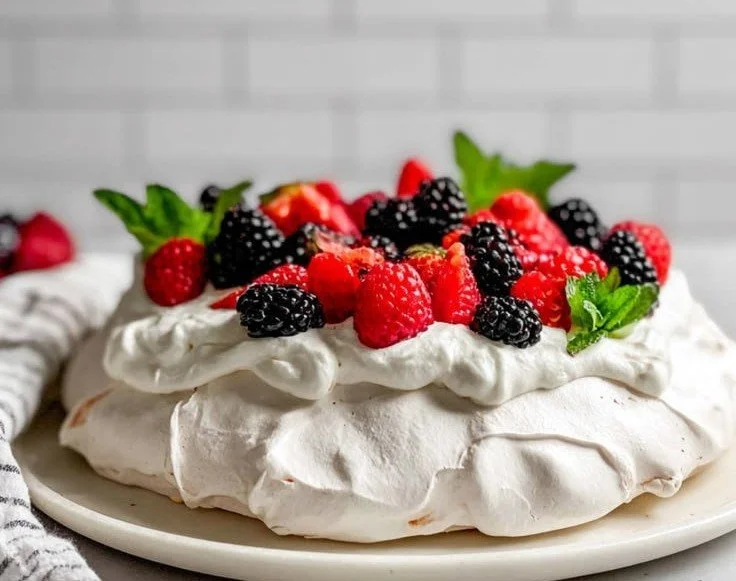
Image ALT suggestion: Sliced pavlova showing crisp exterior and soft interior with a mound of whipped cream and berries on top.
Frequently Asked Questions
Can I use regular granulated sugar for pavlova instead of superfine sugar?
Yes, regular granulated sugar can be used in this pavlova recipe and will produce a stable meringue when added slowly. Ensure you add the sugar one spoonful at a time and continue whipping until the grains fully dissolve to avoid a gritty texture. If you have access to superfine sugar, it dissolves faster and reduces whipping time slightly.
How do I know when a pavlova is done baking?
Look for a dry, crisp exterior and a pale color to confirm the pavlova is done baking. The shell should lift gently from parchment and sound hollow when lightly tapped, while the interior remains soft and marshmallow-like. Cool in the oven with the door ajar to finish drying without risking color change.
Why did my pavlova crack and how can I prevent cracking?
Cracking occurs when the meringue experiences rapid temperature change during cooling, causing structural stress. Prevent cracks by turning off the oven after baking and allowing the pavlova to cool slowly inside the oven with the door slightly open. Also avoid overwhipping and excessive sugar that can create unstable bubbles.
Can I make pavlova ahead of time for a party?
Yes, you can make the meringue base ahead of time but it should be stored unassembled to maintain texture. Keep the cooled meringue in an airtight container at room temperature up to three days and whip the cream and prepare berries shortly before serving to ensure freshness and crispness.
How should I serve pavlova to keep it from getting soggy?
Serve pavlova immediately after assembly to keep the shell crisp and the center soft. Add whipped cream and berries only minutes before serving, and use a slotted spatula when transferring slices to plates to minimize pressure and preserve shape.
Conclusion
Pavlova with Berries delivers a satisfying contrast of textures and bright seasonal flavor that suits celebratory menus and casual gatherings alike. Follow the technique here for a reliable crisp exterior and tender interior, assemble just before serving, and enjoy the clean taste of whipped cream and fresh berries. This pavlova highlights fresh summer fruit and delicate meringue flavor.
Internal links: pavlova with berries recipe, peach cobbler with raspberries, baked salmon meatballs with creamy avocado sauce
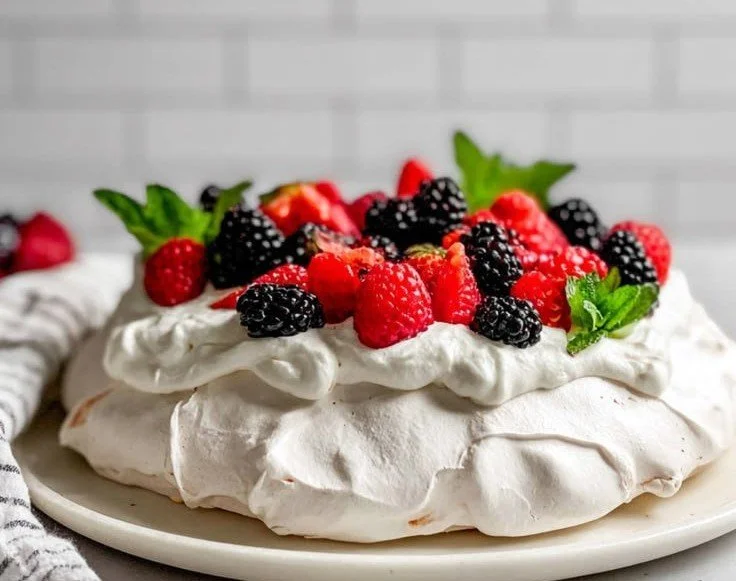
Pavlova with Berries
Ingredients
Method
- Preheat the oven to 250°F (120°C) and line a baking sheet with parchment paper.
- Whisk the egg whites on high speed until soft peaks form.
- Add the granulated sugar gradually, one spoonful at a time, until the mixture becomes glossy and stiff peaks form.
- Fold the vanilla extract, white vinegar, and cornstarch gently into the meringue until well combined.
- Spoon the meringue onto the prepared baking sheet, shaping it into a round nest with a slight dip in the center.
- Bake the meringue for 1 hour, then turn off the oven and let the meringue cool completely in the oven with the door slightly ajar.
- Whip the heavy cream until soft peaks form and spread it over the cooled meringue.
- Top the pavlova with mixed fresh berries and dust with powdered sugar if desired, then serve immediately and enjoy.